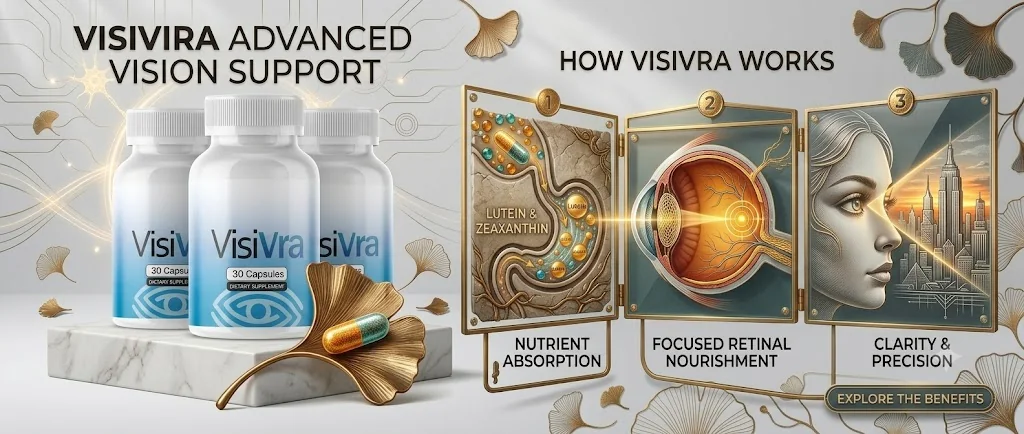
Quick answer: Visivra is described in three steps: nutrient absorption, focused retinal nourishment and clarity. In practice, lutein and zeaxanthin build up in the macula over months, vitamin A and zinc support retinal function, and astaxanthin may ease screen strain. It is not a treatment for eye disease.
The eye in one minute
The macula is a small area of the retina responsible for sharp central vision. It contains yellow pigments, lutein and zeaxanthin, that we can only get from food or supplements. They filter some blue light and act as antioxidants.
The three steps, in plain words
Nutrient absorption
Carotenoids absorb best with a meal containing some fat.
Focused retinal nourishment
Lutein and zeaxanthin accumulate in the macula; vitamin A and zinc support the retina.
Clarity and precision
Higher macular pigment is linked to better glare recovery and contrast in some studies.
What is realistic
Realistic expectations: macular pigment rises slowly over months. Eye comfort may improve sooner if strain is the issue, but no supplement replaces glasses, screen breaks or treatment for eye disease.
A sensible timeline
| When | What to look for |
|---|---|
| Weeks 1 to 4 | Tolerance; screen comfort |
| Weeks 4 to 8 | Glare, eye fatigue at day's end |
| Months 3 to 12 | Macular pigment builds (beyond the refund window) |
Pair it with screen eye strain habits.
Frequently asked questions
General information, not medical advice. Visivra is a dietary supplement and is not intended to diagnose, treat, cure or prevent any disease.